


By CareK9 Team · Updated October 2026
Quick answer: Cracked dog paw pads are usually caused by dry winter air, hot summer pavement, salt/de-icers, allergies, or aging. Mild cases heal in 5-10 days with daily paw balm (shea butter, hemp oil, vitamin E) applied at bedtime. Deep cracks, bleeding, or pus need a vet.
Healthy paw pads should feel smooth, slightly soft, and have a subtle leathery texture — like a firm but pliable glove. When they become rough, scaly, peeling, or visibly cracked, your dog's paws are sending you a problem signal.
The good news: most cracking is easily reversible at home if you catch it early. Here's everything you need to know.
What Causes Cracked Dog Paw Pads?
1. Dry winter air + indoor heating
The #1 cause from November to March. Cold, dry outdoor air strips moisture from paw pads. Then dogs come inside to heated rooms with even drier air. The result: paw pads lose elasticity, crack, and peel. Long-haired breeds and senior dogs are most affected.
2. Hot pavement burns
Asphalt can reach 130-150°F on a 75-85°F summer day. Even brief walks burn paw pads, causing the outer layer to die, peel, and crack as it heals. Test pavement with your hand for 10 seconds — if it's uncomfortable for you, it's too hot for paws.
3. Salt and de-icers
Rock salt and chemical de-icers cause both chemical burns and dehydration of paw pads. Many also contain ethylene glycol — toxic if licked. Cracked pads in winter often have a chemical-burn component, not just dry-air damage.
4. Allergies
Food allergies (chicken, beef, grains) and environmental allergies (pollen, dust, grass) often manifest in paw pads. Dogs with allergy-related paw issues typically also lick excessively, have ear infections, or chew at their feet.
5. Aging
Senior dogs (8+ years) naturally lose collagen and skin elasticity. Paw pads become drier and crack more easily even without environmental stress. This is one of the most preventable senior dog issues with daily paw balm.
6. Vitamin/zinc deficiency
Rare in dogs eating commercial food, but possible in dogs on restricted home-cooked diets. Zinc-responsive dermatosis specifically affects paw pads. Vet will diagnose with a blood test.
How to Treat Cracked Paw Pads at Home
- Clean first. Rinse paws with lukewarm water (use a MudBuster or basin). Pat completely dry, especially between toes.
- Apply paw balm twice daily. Morning before walks (creates a protective barrier) and at bedtime (overnight healing). Use clean fingers to massage a thin layer into each pad and the skin between toes.
- Cover at bedtime for severe cracks. Light dog socks or even old human socks for 30-60 minutes after applying balm keeps the balm in place and prevents licking.
- Limit pavement exposure during healing. Walk on grass when possible. Carry your dog over very hot or very cold pavement.
- Watch for licking. Excessive licking re-irritates the pads. If your dog won't stop, use a recovery cone briefly or apply balm only at bedtime.
With consistent daily application, mild cracks heal in 5-10 days. Moderate cracks heal in 2-3 weeks. Deep cracks or those with bleeding need vet attention.
What's in a Good Paw Balm?
Look for these ingredients:
- Shea butter — deeply moisturizes, contains vitamins A and E for healing
- Coconut oil — antimicrobial, helps prevent infection in cracks
- Hemp seed oil — omega-3 and omega-6 fatty acids reduce inflammation
- Vitamin E — antioxidant, supports skin cell regeneration
- Beeswax — creates a protective barrier that locks in moisture without trapping bacteria
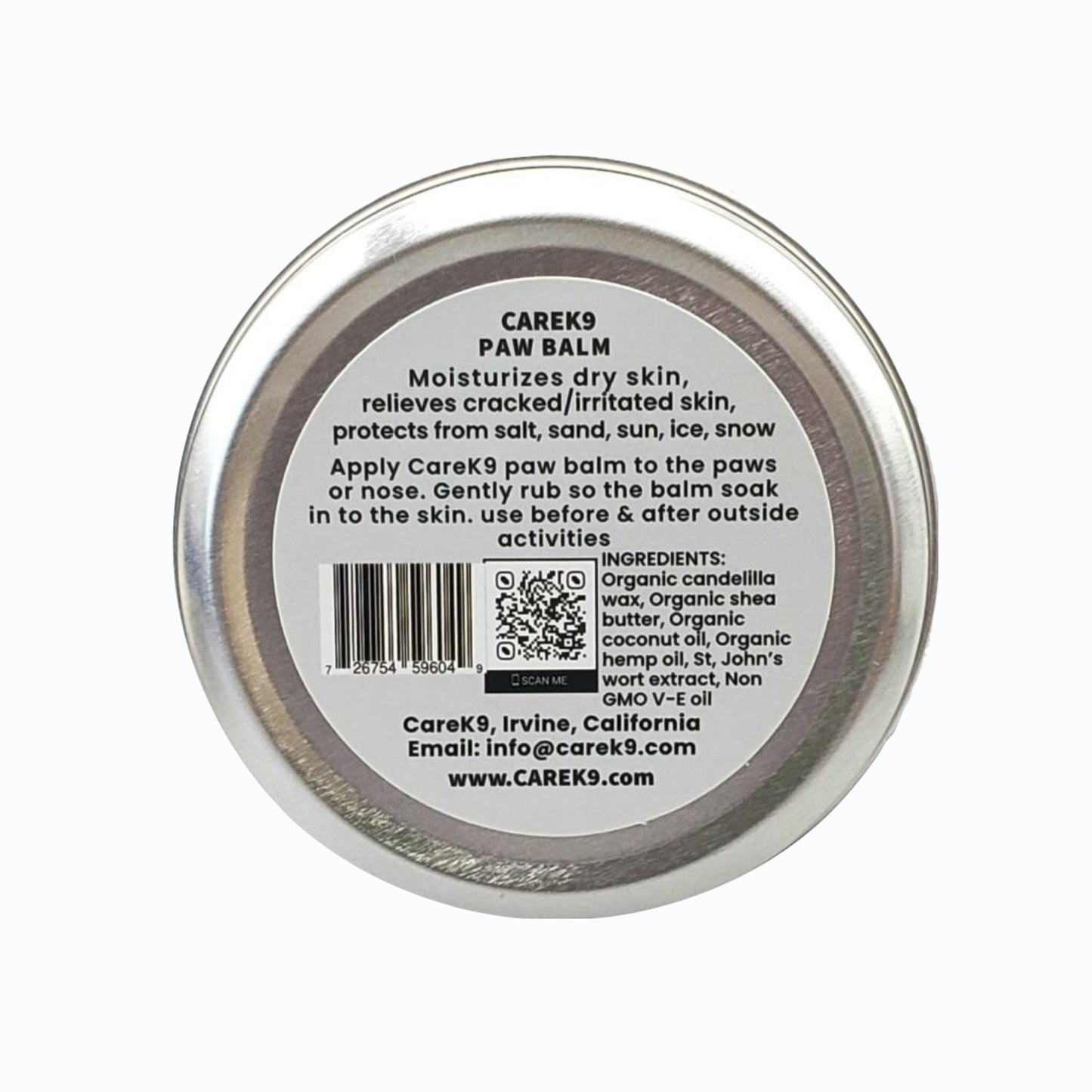
Avoid: petroleum-based balms (don't actually penetrate the skin), essential oils in concentration (can irritate broken skin), and anything with artificial fragrance. CareK9 Paw Balm uses all five organic ingredients above with no fillers.
When to See a Vet
- Bleeding cracks or open sores
- Pus, foul smell, or significant swelling
- Pads turning white or black (could indicate frostbite or chemical burn)
- Your dog is limping or won't bear weight
- Cracks don't improve after 2-3 weeks of daily care
- Cracks on multiple paws plus other signs of allergies (ear infections, excessive licking elsewhere)
How to Prevent Cracked Paw Pads
Winter
- Apply paw balm 15 min before walks (protective barrier)
- Wipe paws immediately after walks to remove salt residue
- Apply balm again at bedtime for overnight moisture
- Consider dog booties for extreme cold or heavy salt areas
Summer
- Walk in early morning or evening when pavement is cool
- Test pavement with your hand for 7-10 seconds before walking
- Apply balm before walks for thermal protection
- Walk on grass when available
Year-round (senior dogs)
- Daily balm application at bedtime as preventive care starting at age 7
- Weekly paw inspection — check between toes for early signs of dryness
- Consider an omega-3 supplement for whole-body skin support
Frequently Asked Questions
Is human moisturizer safe for dogs' paws?
No. Most human moisturizers contain ingredients (parabens, fragrances, artificial colors) that are unsafe if licked. Dogs lick their paws frequently, so any topical needs to be dog-safe and ideally food-grade.
Can I use coconut oil alone on cracked paws?
Coconut oil alone helps mildly but isn't enough for actual cracks. A proper balm combines coconut oil with shea butter (deeper moisture), vitamin E (healing), and beeswax (protective barrier). Coconut oil alone absorbs too quickly to be effective.
How long does it take for cracked paws to heal?
Mild dryness: 3-5 days. Visible cracks: 5-10 days. Deep cracks: 2-3 weeks. Anything not healing after 3 weeks needs vet evaluation.
Why does my dog have cracked paws even though we live in a mild climate?
Common causes outside of weather: indoor heating in winter, allergies (especially seasonal), age-related changes, walking on rough/hot surfaces, or low-grade chronic licking. Consider an elimination check on diet and walking surfaces.
Can paw balm be used on the nose too?
Yes. The same shea butter + hemp oil + vitamin E formula works on dry, cracked dog noses (a common senior issue). Apply daily until healed.
Heal cracked paws — and protect against the next crack.
Organic. Food-grade. Safe if licked.
Shop Paw Balm — $19.95