


By CareK9 Team · Updated September 2026
Quick answer: Cooked or air-dried salmon skin is safe and highly beneficial for dogs — rich in omega-3 fatty acids, collagen, and protein. Raw salmon skin is NOT safe due to parasite risk. Avoid smoked or salted salmon skin (too much sodium). Limit to 1-2 small pieces per 10 lbs of body weight per day.
Salmon skin is one of the most nutritionally dense single-ingredient dog treats you can give — when it's prepared correctly. It's also one of the most misunderstood. Let's clear up exactly when salmon skin is great, when it's dangerous, and how much to feed.
The Health Benefits of Salmon Skin for Dogs
Salmon skin contains a remarkable nutrient density:
1. Omega-3 fatty acids (EPA + DHA)
The two most studied anti-inflammatory fats in nature. EPA reduces joint inflammation, DHA supports brain function. Both improve skin and coat quality dramatically within 3-4 weeks of consistent intake. Wild-caught salmon skin contains the highest concentration of omega-3s of any commonly available dog food.
2. Collagen and gelatin
Salmon skin is rich in marine collagen, which supports joint cartilage, skin elasticity, and gut lining health. Particularly valuable for senior dogs and large breeds prone to joint issues.
3. Complete protein
Salmon skin contains all essential amino acids dogs need. About 20-25% protein by weight in dried form.
4. Vitamin D and B-vitamins
Fish skin is naturally rich in vitamin D (rare in pet food) and several B-complex vitamins that support energy metabolism and nerve health.
When Salmon Skin Is NOT Safe
Raw salmon — never feed
Raw Pacific salmon can carry Neorickettsia helminthoeca, a parasite that causes salmon poisoning disease (SPD) in dogs. SPD has a 90% fatality rate if untreated. Atlantic salmon doesn't carry this parasite but can carry others. Bottom line: never feed raw salmon to dogs.
Smoked salmon — avoid
Way too much sodium for dogs. Also often contains preservatives and seasonings. The smoking process doesn't eliminate parasite risk to the same degree as proper cooking or air-drying.
Salmon skin with seasoning
Any salmon prepared with garlic, onion, salt, butter, or lemon should not be shared with dogs. Garlic and onions are toxic. Salt and butter cause digestive issues.
Bones
Always remove small bones before feeding salmon skin. Cooked fish bones can splinter.
The Safe Way: Air-Dried Salmon Skin Treats
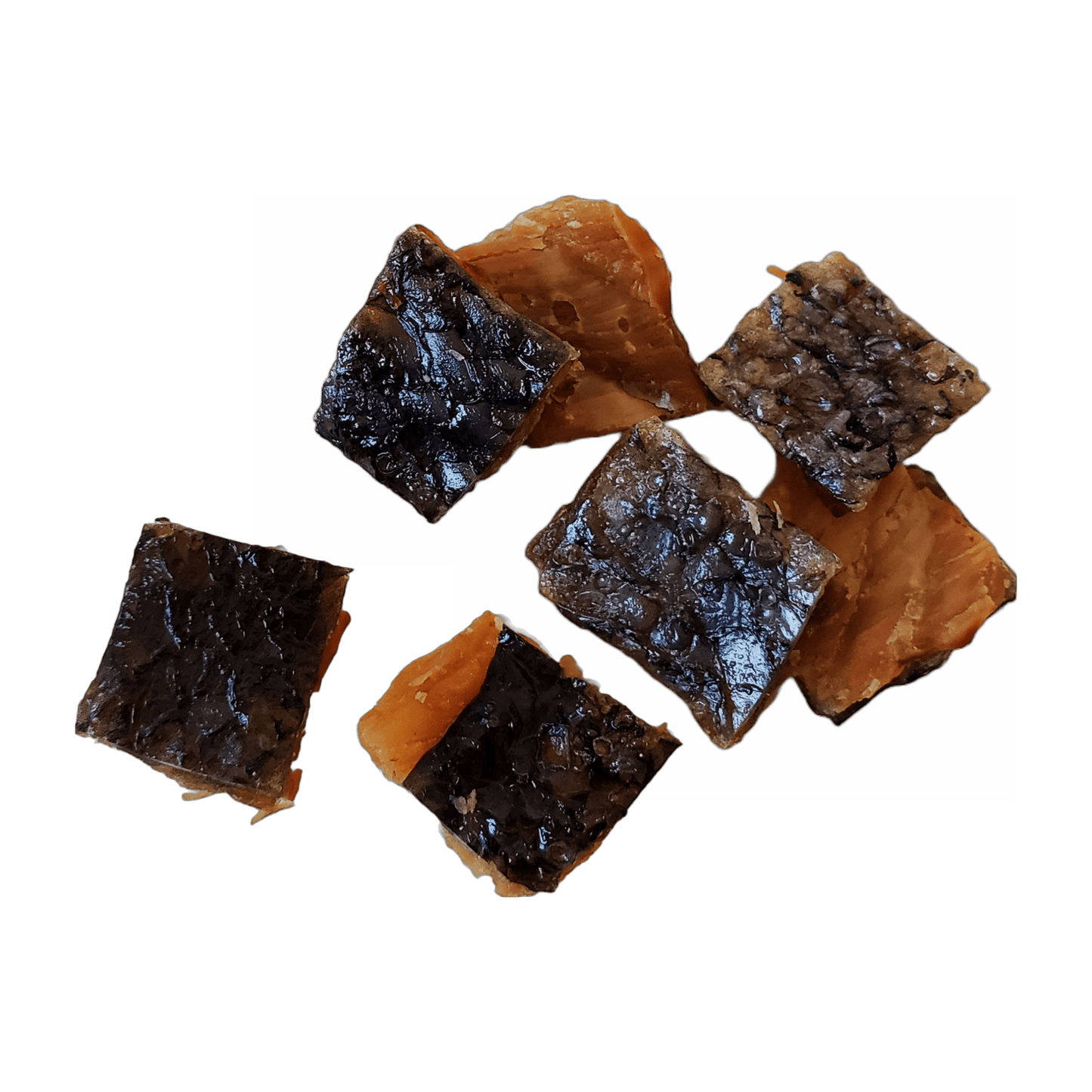
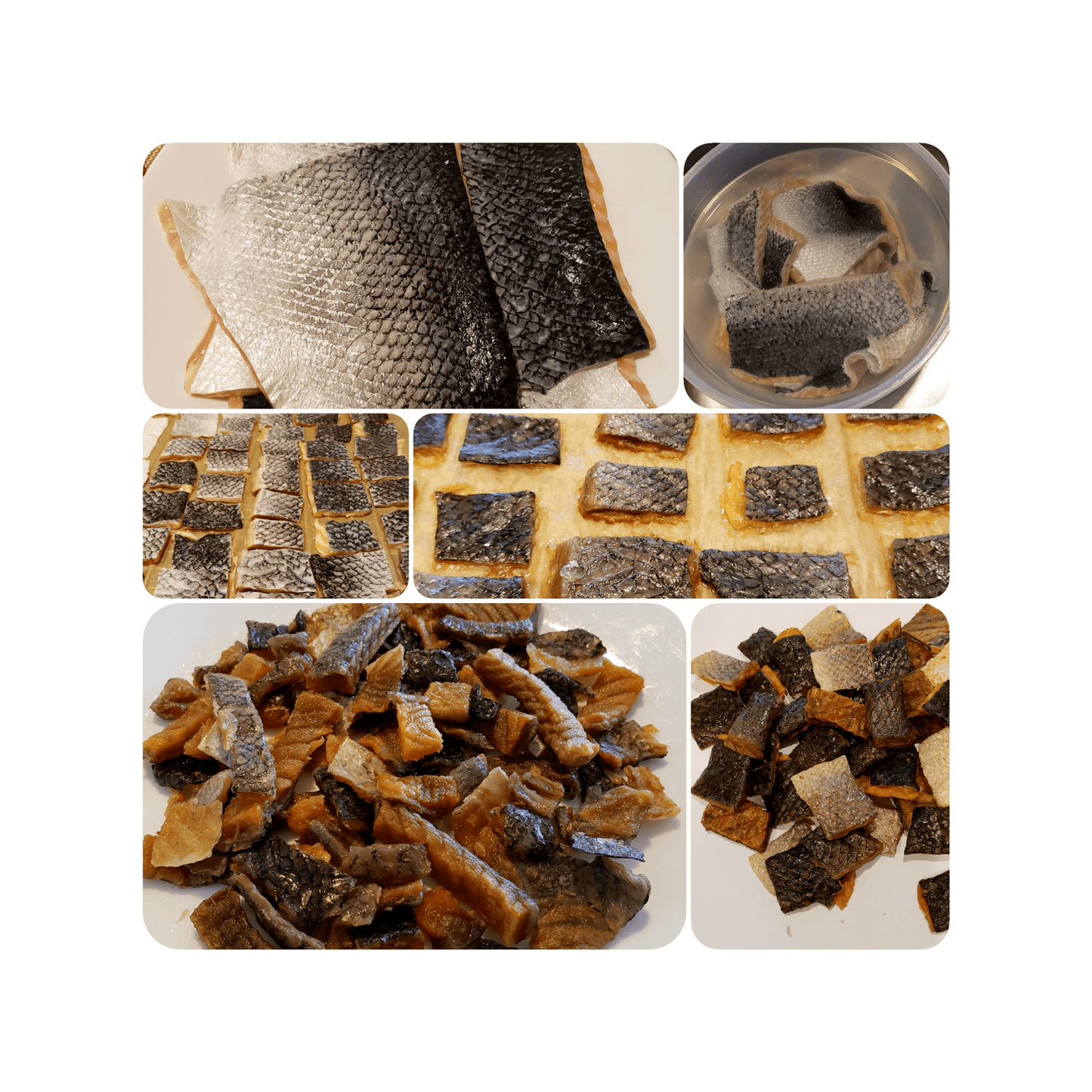
Air-drying at low temperatures (under 160°F) for many hours achieves two goals: it kills parasites and locks in the natural nutrients without adding anything. No oil, no salt, no seasoning. Just salmon skin.
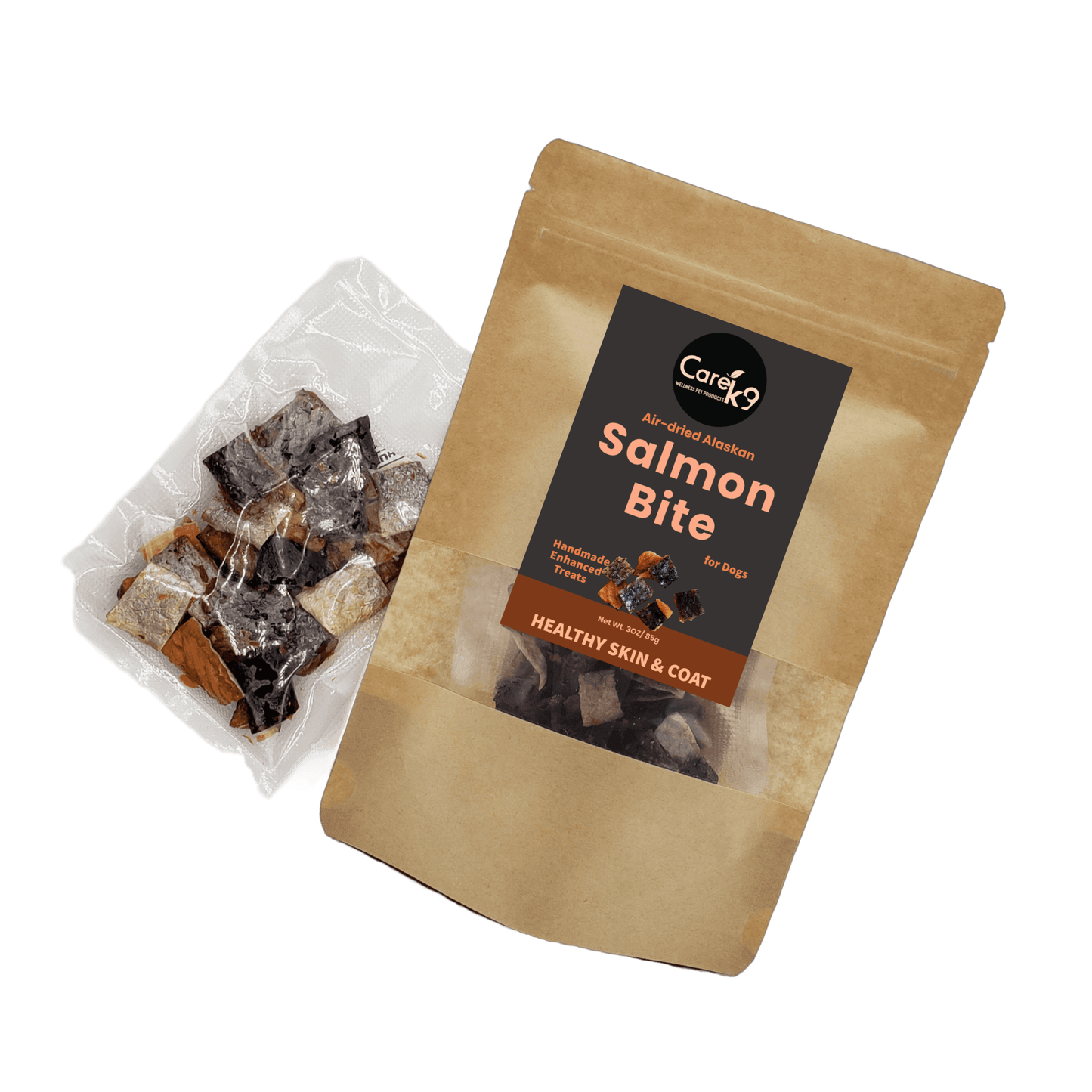
CareK9 Salmon Skin Bites use wild-caught Alaskan salmon, air-dried in small batches. Single ingredient. No preservatives. Crunchy texture dogs love.
How Much Salmon Skin Should You Feed?
Salmon skin is calorie-dense and rich in fats. The 10% rule applies — treats should be no more than 10% of daily calories.
| Dog size | Daily max (small bites) |
|---|---|
| Small (under 15 lbs) | 1-2 bites |
| Medium (15-40 lbs) | 3-5 bites |
| Large (40-80 lbs) | 5-8 bites |
| Extra large (80+ lbs) | 8-12 bites |
For dogs new to salmon, start with half the recommended amount for 2-3 days to check for digestive sensitivity. Rich foods can cause loose stool in some dogs at first.
Salmon Skin vs Fish Oil Supplements
Both deliver omega-3s, but with different tradeoffs:
- Salmon skin: Whole-food source, includes collagen and protein, dogs love the texture/taste, no daily liquid measuring
- Fish oil: More concentrated omega-3 per serving, easier to dose precisely, no chewing required
For most healthy dogs, salmon skin treats provide enough omega-3 for skin and coat benefits. For dogs with severe joint issues or skin conditions, a fish oil supplement provides a higher therapeutic dose. The two aren't mutually exclusive.
Who Benefits Most From Salmon Skin?
- Dogs with dull or dry coats — visible shine improvement in 3-4 weeks
- Senior dogs — joint support and immune boost
- Large/working breeds — joint and cartilage support
- Dogs with chicken or beef allergies — novel protein source
- Dogs in cold climates — extra fat for energy, skin moisture
- Puppies (with vet OK) — DHA supports brain development
Frequently Asked Questions
Can dogs eat the skin from grocery-store cooked salmon?
Yes, if it was cooked plain with no seasoning, butter, oil, garlic, onion, or salt. Most restaurant or grocery-store cooked salmon doesn't qualify. Best to stick with air-dried treats made specifically for dogs.
What about salmon allergies?
Fish allergies are less common than chicken or beef in dogs, but they exist. Introduce slowly the first time and watch for itching, ear infections, or digestive upset over 1-2 weeks.
Is farmed salmon skin as good as wild-caught?
Wild-caught is significantly better. Farmed salmon has lower omega-3 levels, more omega-6 (inflammatory), and often contains antibiotics or contaminants. CareK9 only uses wild-caught Alaskan salmon.
Can puppies eat salmon skin?
Yes, from around 12 weeks old in small quantities. The DHA in salmon supports brain development. Start with very small pieces and watch for digestive tolerance.
Will salmon skin make my dog smell like fish?
A small amount might give occasional fishy breath, but daily moderate intake doesn't cause body odor in most dogs. If your dog suddenly smells strongly fishy from the coat, that's typically anal gland issues unrelated to diet.
How should I store salmon skin treats?
Resealable container at room temperature, away from direct sunlight. Most air-dried fish treats last 4-6 months unopened, 6-8 weeks once opened. Refrigerate in humid climates to extend shelf life.
Wild-caught Alaskan salmon, air-dried.
One ingredient. Omega-3 powerhouse.
Shop Salmon Skin Bites — From $18.95