


By CareK9 Team · Updated June 2026
Quick answer: Joint pain in senior dogs (7+ years) usually shows up first as stiffness after rest, slower stair climbing, and reluctance to jump. Mild cases respond well to daily food toppers with green-lipped mussel and turmeric — natural sources of glucosamine and anti-inflammatories. Severe cases need a vet for prescription options.
Joint pain is the most common health issue affecting dogs over 7 — and one of the most under-recognized. Dogs are stoic by instinct; in the wild, showing weakness makes you prey. Your senior dog will hide discomfort until it's significant, then suddenly seem to "go downhill overnight."
Catching joint issues early matters because the damage is progressive. Early intervention with supplements and topper-based nutrition can preserve mobility for years longer than waiting until limping appears.
7 Early Signs of Senior Dog Joint Pain
- Stiffness after rest, especially in the morning. Your dog moves slowly for the first few minutes after sleeping. This is the #1 earliest sign and often dismissed as "just getting old."
- Hesitation before jumping — onto the couch, into the car, off the bed. They CAN still do it but pause first.
- Slower stair climbing or pausing halfway up stairs they used to bound up.
- Lying down more, especially during walks. Refusing to walk as far as before, or wanting to turn back early.
- Licking joints excessively — usually the elbow or hip on one side.
- Mood changes. Irritability when touched in certain areas, hiding under furniture, less interest in play.
- Muscle loss in hind legs. When joints hurt, dogs unconsciously shift weight forward, and the hind muscles atrophy from disuse.
Most dogs show 2-3 of these signs at the early stage. By the time you notice limping or visible difficulty walking, the underlying joint damage is already moderate-to-severe.
What Causes Joint Pain in Senior Dogs?
1. Osteoarthritis (most common)
Wear-and-tear breakdown of joint cartilage. Affects ~80% of dogs over age 8. Worsens slowly without intervention.
2. Hip and elbow dysplasia
Genetic malformation of joints, common in large breeds (Labs, Goldens, Shepherds). Can cause pain from puppyhood but worsens with age.
3. Cranial cruciate ligament (CCL) tears
The dog version of a torn ACL. Usually requires surgery. Common in middle-aged active dogs.
4. Injuries from earlier in life
That hard fall, sprained leg, or hit-by-car from 5 years ago often manifests as arthritis in the same joint as the dog ages.
What Actually Helps (Ranked by Evidence)
1. Daily omega-3 fatty acids (EPA + DHA)
Strongest evidence base of any natural intervention. EPA reduces joint inflammation directly. Sources: fish oil supplements, salmon skin treats, or food toppers with green-lipped mussel. Effect visible in 4-6 weeks.
2. Green-lipped mussel
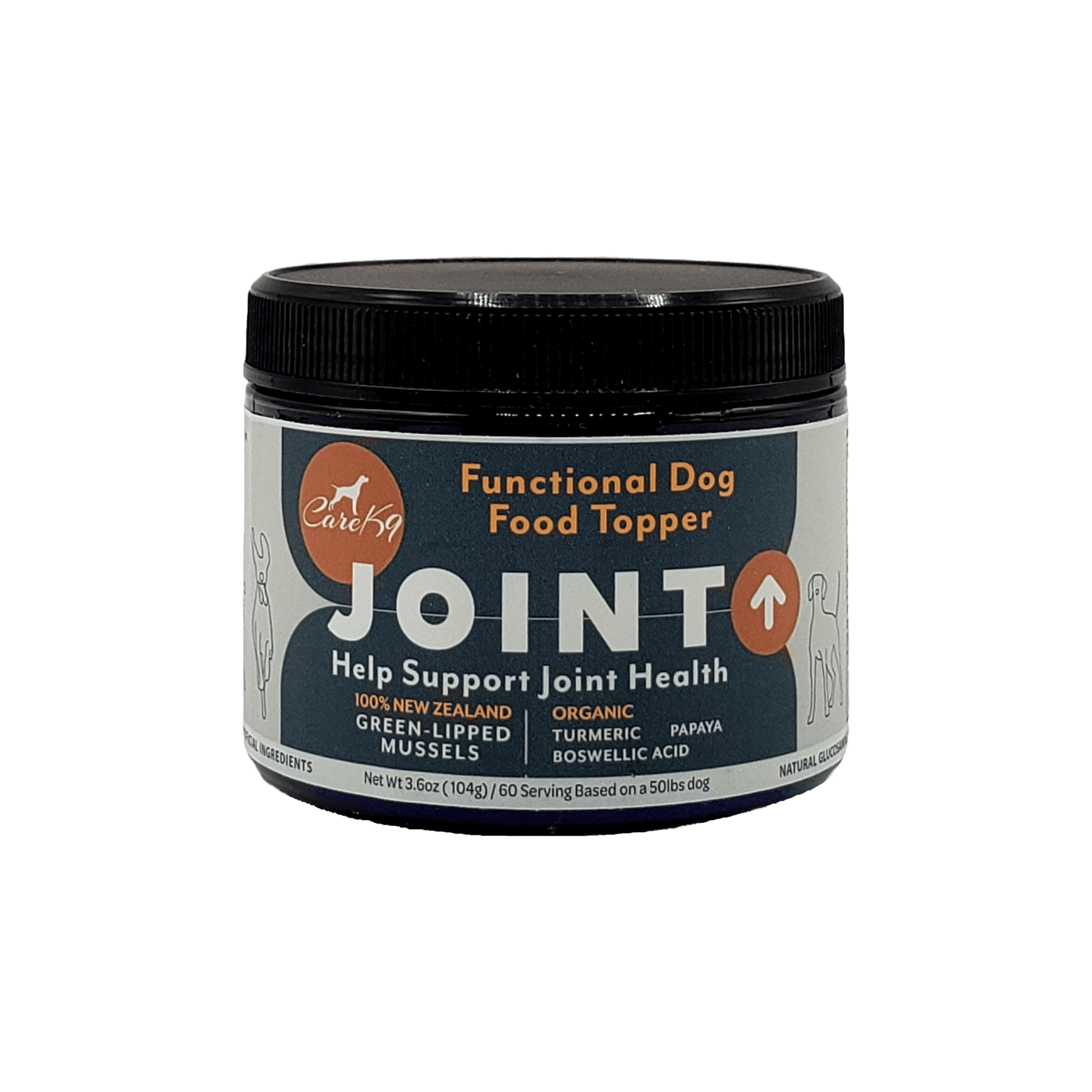
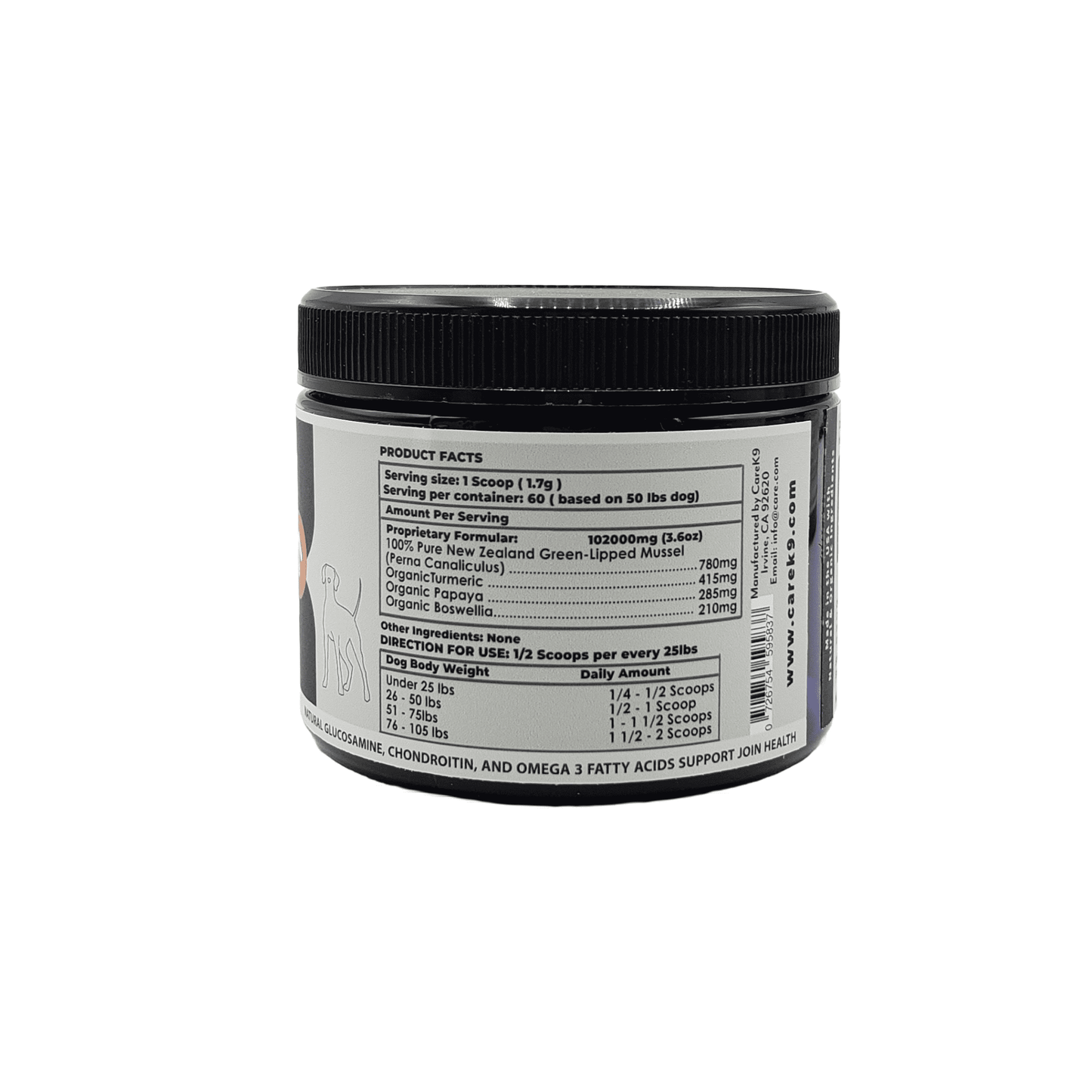
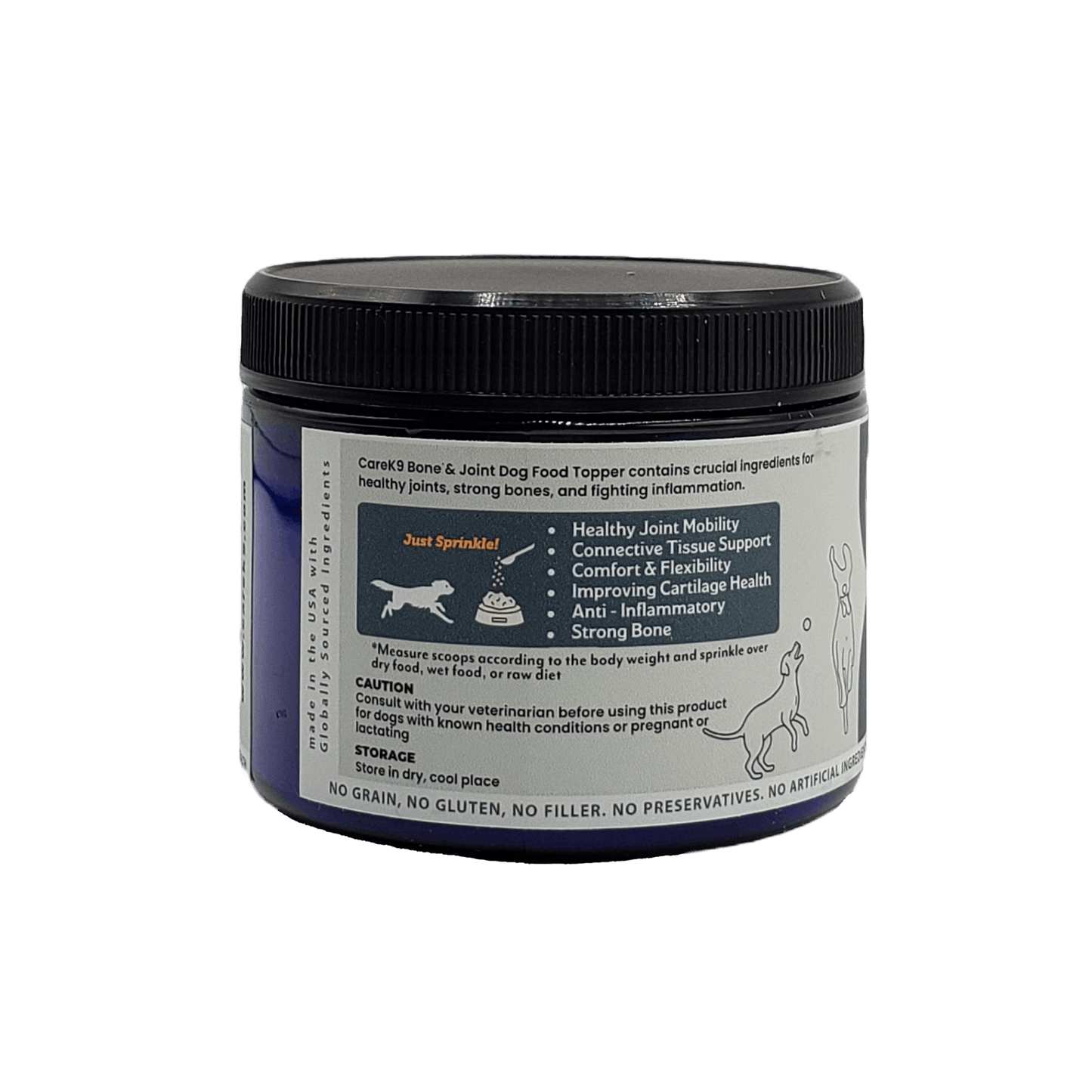
Contains naturally-occurring glucosamine, chondroitin, and unique omega-3 (ETA) not found in other sources. Multiple veterinary studies show measurable mobility improvement within 6-8 weeks. CareK9 Joint Topper uses green-lipped mussel as its primary active ingredient.
3. Turmeric (with black pepper)
Curcumin is a natural anti-inflammatory. The piperine in black pepper increases absorption 20x. Standalone turmeric without piperine is weak — always pair them.
4. Weight management
Every extra pound puts ~4 lbs of force on knees and hips. Slimming a senior dog by even 5% noticeably reduces joint stress. Often the single biggest mobility intervention.
5. Controlled, regular movement
Two short daily walks beat one long walk. Swimming is the gold standard exercise for arthritic dogs — full range of motion, zero impact.
6. Vet-prescribed NSAIDs or injections (for moderate-to-severe cases)
When natural interventions aren't enough, prescription anti-inflammatories or monthly Adequan/Cytopoint injections can dramatically improve quality of life. Talk to your vet.
The Daily Routine for Senior Joint Health
- Morning: Sprinkle joint topper on breakfast. Two short walks throughout the day rather than one long one.
- Evening: Brief gentle massage on hind quarters. Soft bedding (not hard floors).
- Weekly: 10-15 min swim if available, or controlled play on grass (not pavement).
- Monthly: Weight check. Joint topper supply check.
Frequently Asked Questions
At what age should I start joint support for my dog?
For large breeds (50+ lbs) prone to dysplasia, start at age 5 as prevention. For medium breeds, age 6. For small breeds, age 7-8. Earlier is fine — green-lipped mussel and turmeric are safe long-term.
How long until joint toppers work?
Most dogs show improved stiffness within 4-6 weeks. Full effect at 8-12 weeks. Consistency matters more than dose — daily use beats high-dose intermittent use.
Are joint toppers safer than prescription NSAIDs?
Yes, with zero risk of GI bleeding or kidney/liver effects associated with long-term NSAID use. But for moderate-to-severe pain, NSAIDs work faster and stronger. Many vets recommend both: NSAIDs short-term for flare-ups, toppers long-term for maintenance.
Can young dogs use joint supplements?
Yes — and large-breed puppies often benefit. Green-lipped mussel is safe from puppyhood. Some vets recommend starting at age 1-2 for breeds prone to hip dysplasia.
What's better: glucosamine pills or food toppers?
Toppers with green-lipped mussel contain glucosamine in its natural form (not synthetically isolated), which dogs absorb better. Plus they get the additional omega-3 and chondroitin from the whole-food source. Pills are convenient but less effective per dose.
Slow the stiffness. Keep them moving.
Green-lipped mussel + turmeric. Sprinkle daily.
Shop Joint Topper — $42.95
