


By CareK9 Team · Updated October 2026
Quick answer: Probiotics help dogs with loose stool, gas, yeast issues, and weak immunity. The most effective forms combine live probiotic strains (Lactobacillus, Bifidobacterium) with prebiotics (fiber that feeds the good bacteria) and functional mushrooms. Daily use produces results in 1-2 weeks for digestive issues, 4-6 weeks for immune support.
If your dog has chronic soft stool, persistent gas, recurring yeast infections, or seems to get sick easily — their gut microbiome is likely out of balance. The gut is where 70% of the immune system lives, so when gut bacteria are imbalanced, everything else suffers.
What Are Probiotics and How Do They Work in Dogs?
Probiotics are live beneficial bacteria. They populate the digestive tract and crowd out harmful bacteria, support nutrient absorption, and produce short-chain fatty acids that strengthen the gut lining and feed immune cells.
Dogs have a slightly different gut microbiome than humans, dominated by Firmicutes and Bacteroidetes. The most-researched dog-friendly probiotic strains are:
- Lactobacillus acidophilus — supports digestion, reduces gas
- Lactobacillus rhamnosus — anti-inflammatory, helps with allergies
- Bifidobacterium animalis — improves stool quality, reduces transit time
- Enterococcus faecium — proven for diarrhea management in dogs
- Saccharomyces boulardii — a beneficial yeast that crowds out harmful yeast
When Dogs Need Probiotics
- After antibiotics — antibiotics kill bacteria indiscriminately, including the good ones. Probiotics restore the gut population.
- Chronic loose stool or diarrhea — usually a sign of dysbiosis (imbalanced gut bacteria).
- Recurring yeast infections — ears, paws, skin. Often connected to gut imbalance.
- Excessive gas or bloating — sign that fermentation is happening in the wrong place by the wrong bacteria.
- Skin issues or food sensitivities — leaky gut allows allergens into the bloodstream. Probiotics help repair the gut lining.
- After dietary changes — switching foods is hard on the gut. Probiotics smooth the transition.
- During stress — boarding, moving, surgery recovery. Stress disrupts gut bacteria.
- For seniors — gut diversity declines with age. Daily probiotics help maintain it.
Why Prebiotics + Functional Mushrooms Make Probiotics Work Better
Live probiotics alone are only part of the equation. To really shift the gut microbiome, you need three things working together:
- Probiotics — the live bacteria themselves
- Prebiotics — fiber that feeds the good bacteria (inulin, FOS, beta-glucans)
- Functional mushrooms — shiitake, reishi, turkey tail. Contain beta-glucans that double as prebiotics AND directly stimulate immune cells
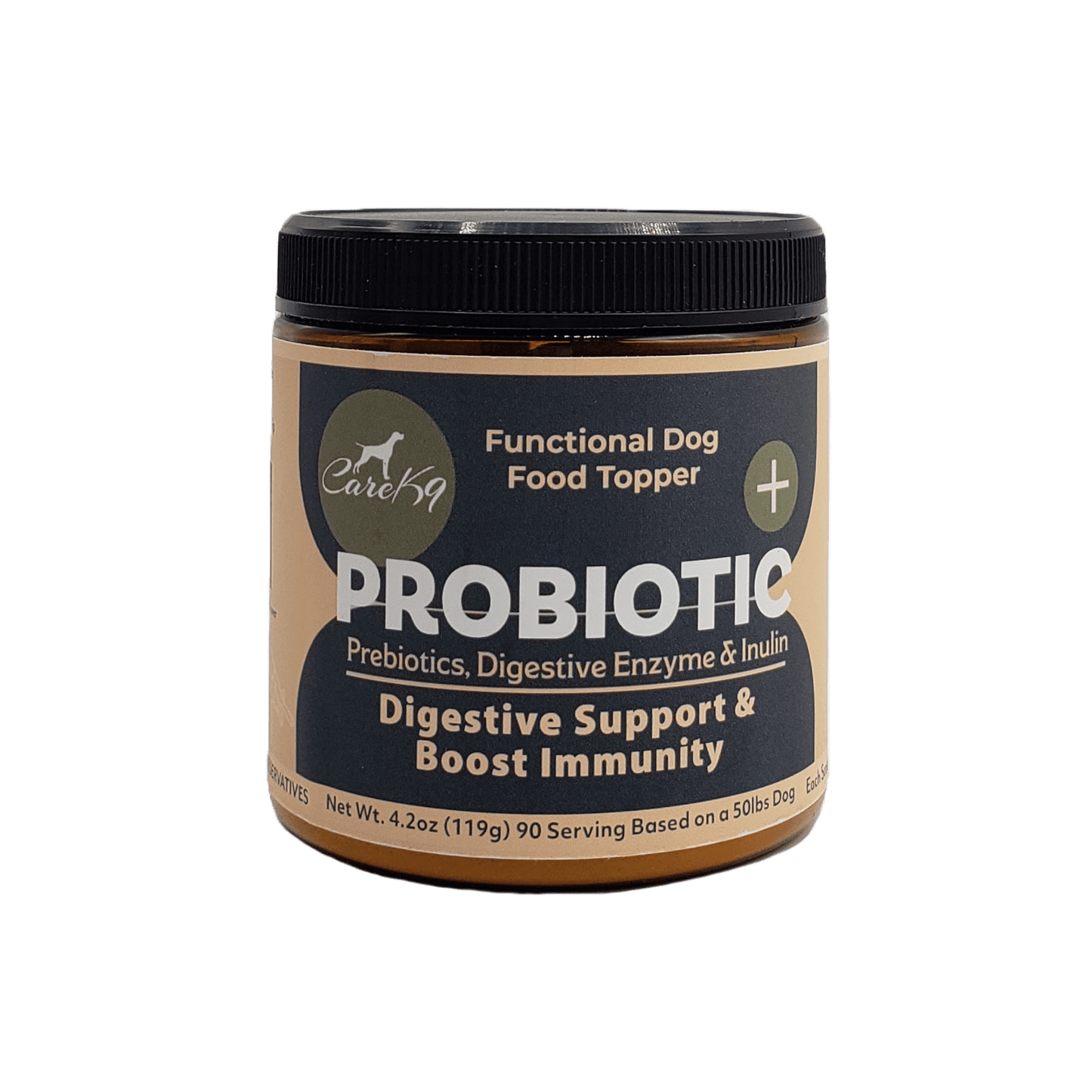
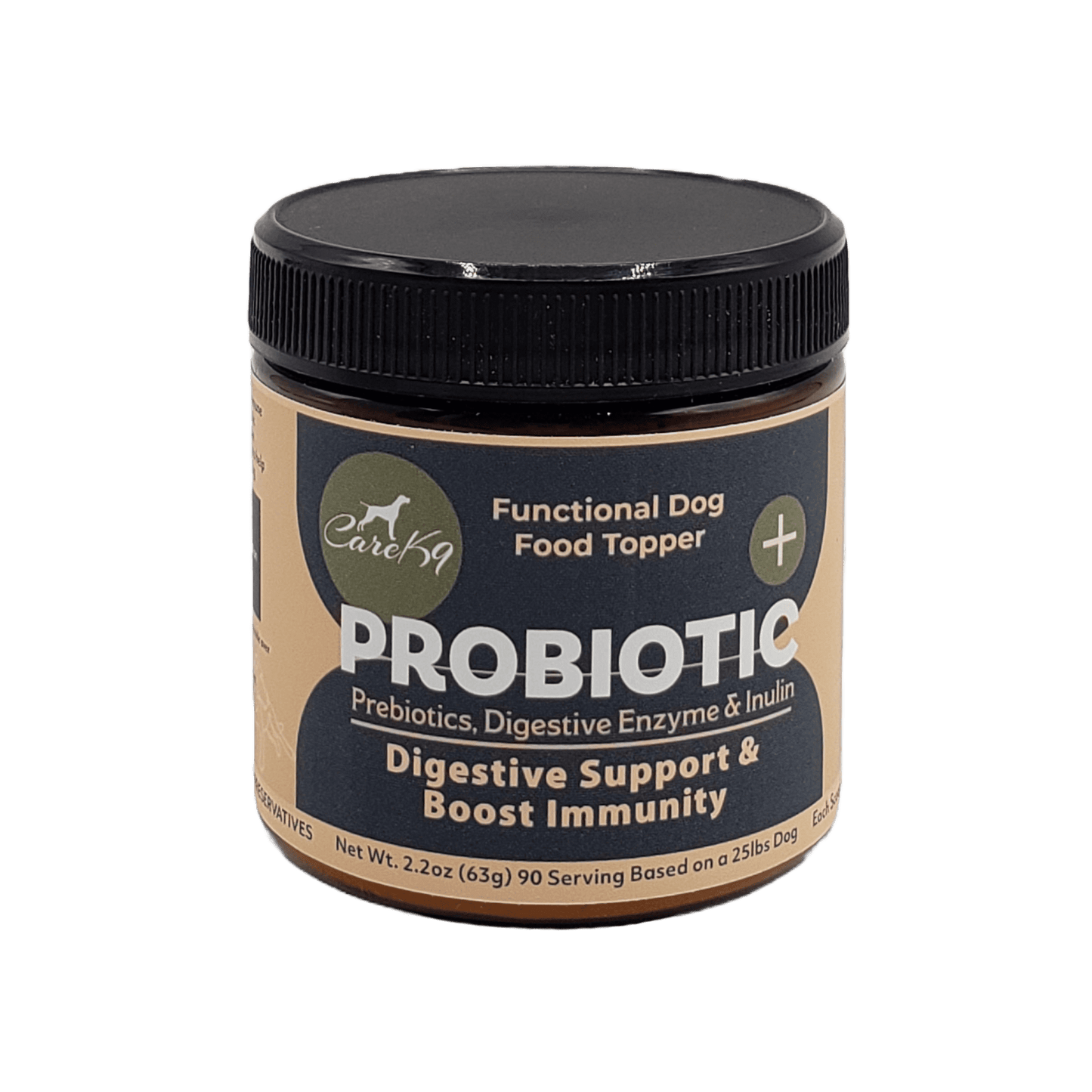
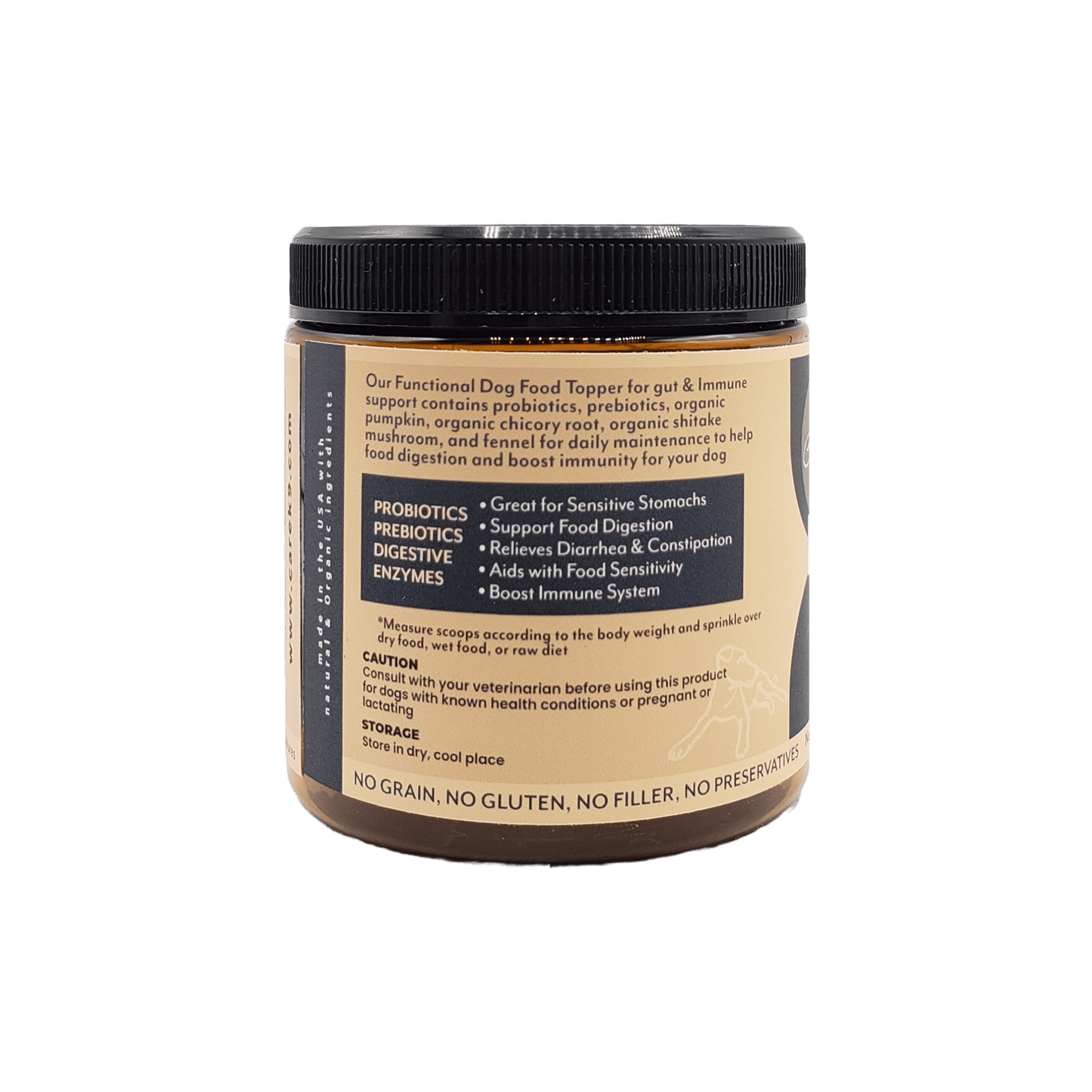
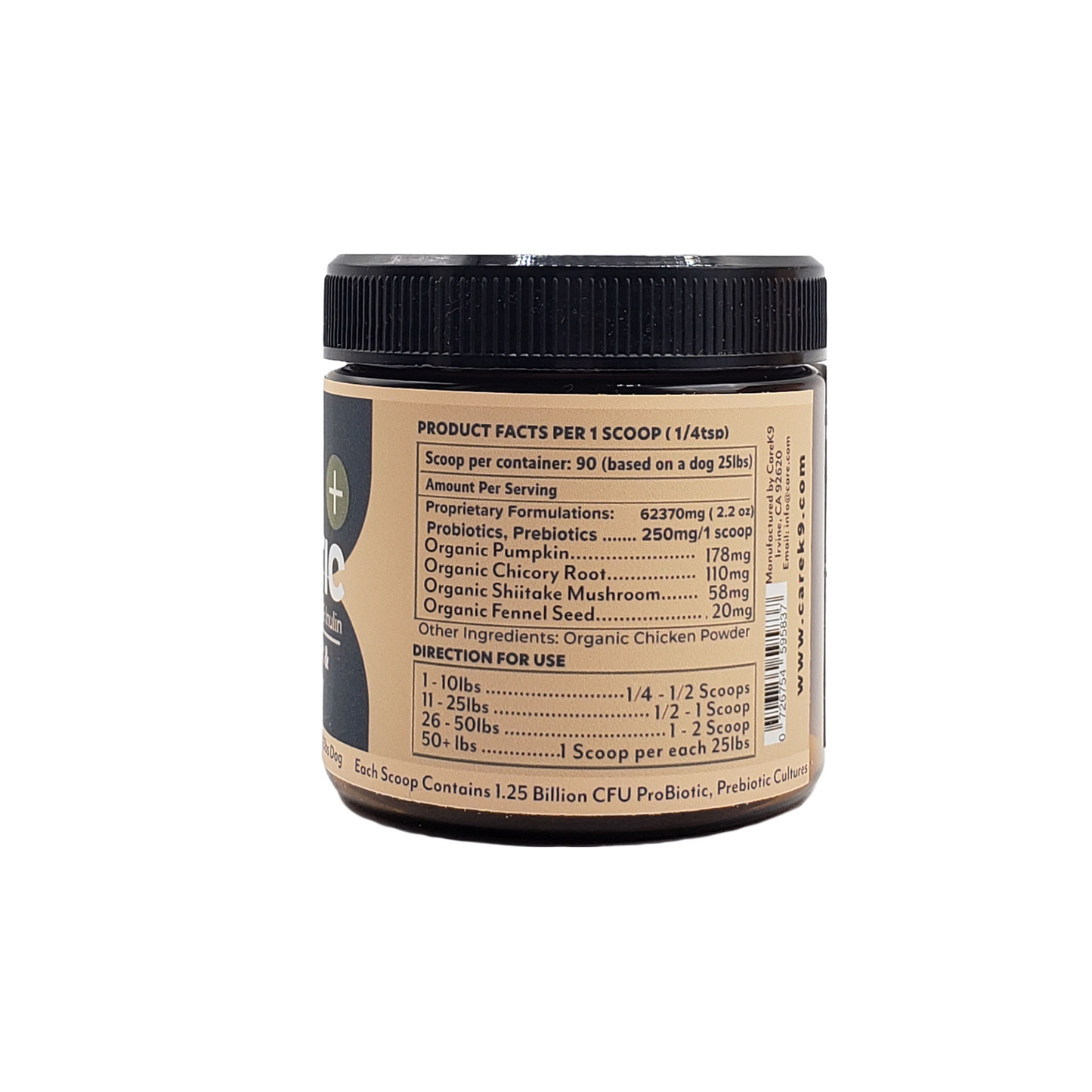
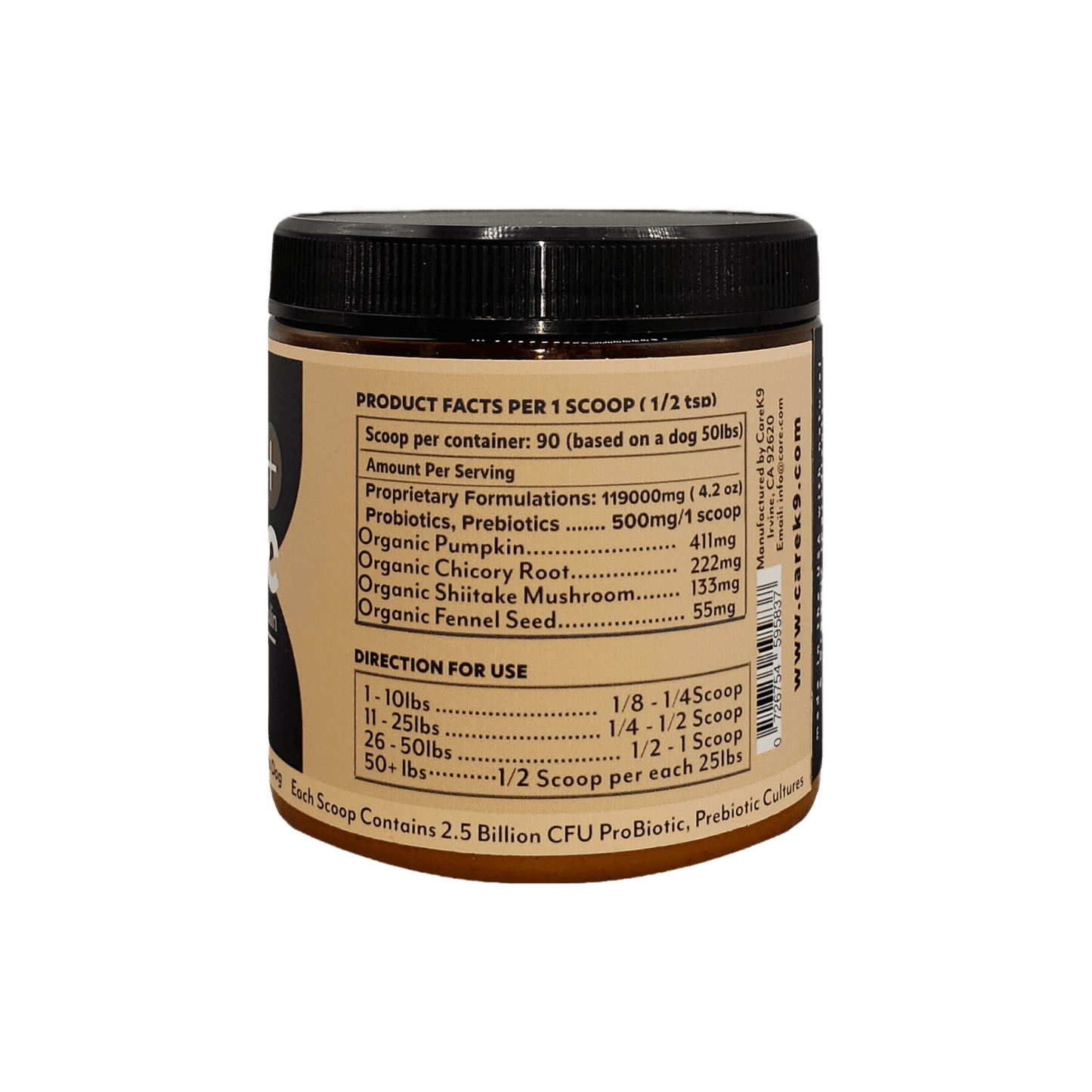
CareK9 Digestive + Immune Topper uses all three together, which is why most dogs show improvement within 1-2 weeks instead of the 4-6 weeks typical of probiotic-only supplements.
How to Introduce Probiotics
- Start small: 1/4 of the recommended dose for the first 3 days. Some dogs experience initial gas as the gut bacteria shift.
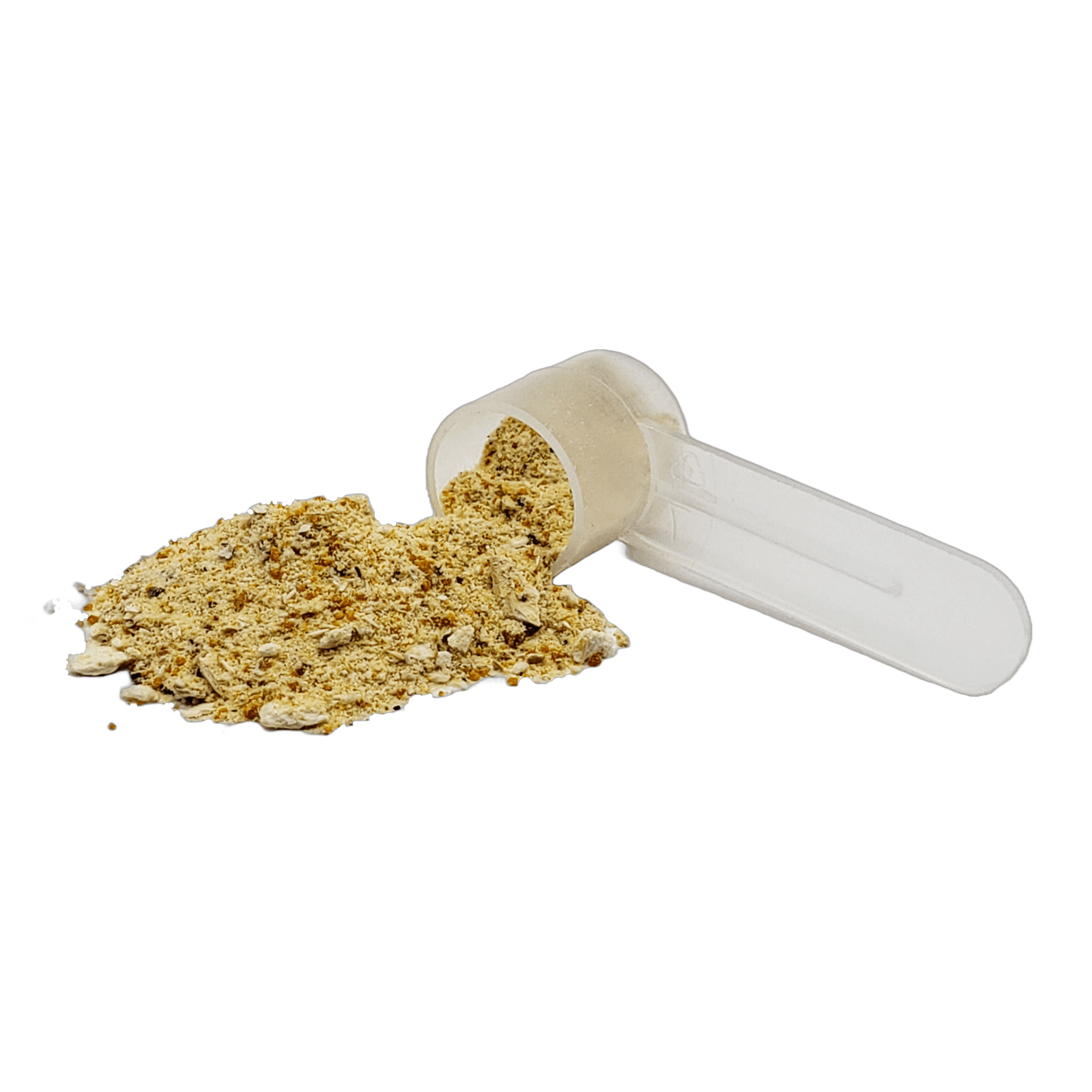
- Sprinkle on food daily: Mix into wet food or sprinkle on dry kibble with a few drops of warm water.
- Consistency over dose: Daily use at lower dose beats sporadic high doses.
- Track stool quality: Improvement in stool firmness and reduced gas usually visible in 1-2 weeks.
- For chronic issues: Allow 4-6 weeks for full microbiome shift before judging effect.
Signs the Probiotic Is Working
- Firmer, more consistent stool (vet score 3 instead of 5)
- Less gas and less stool volume (better absorption)
- Reduced "corn chip" smell on paws (less systemic yeast)
- Better appetite or interest in food
- Less ear-shaking or paw-licking (early sign of allergy improvement)
- Better coat shine within 4-6 weeks
What Probiotics Won't Fix
- Acute parasitic diarrhea (giardia, hookworm) — needs vet meds first
- Foreign body obstruction — surgical emergency
- Pancreatitis — needs vet diagnosis and dietary changes
- True food allergies — needs an elimination diet, not just probiotics
If digestive issues persist after 2 weeks of consistent probiotic use, see your vet.
Frequently Asked Questions
Can dogs have human probiotics?
Some human probiotics work but most contain strains optimized for human gut flora, not dogs'. Dog-specific formulas use canine-tested strains in clinically-effective doses. Plain yogurt as occasional treat is fine; multi-billion CFU human capsules are not ideal.
How long do probiotics take to work?
Digestive symptoms (loose stool, gas): 1-2 weeks. Skin/allergy benefits: 4-6 weeks. Full immune optimization: 8-12 weeks.
Can puppies have probiotics?
Yes — and they often benefit. Puppy immune systems develop in the gut. Probiotics can reduce puppyhood digestive upsets and reduce risk of food allergies later. Use puppy-specific dose.
Do probiotics need refrigeration?
Some do, some don't. Look for "shelf-stable" or "spore-form" strains if you don't want to refrigerate. Powdered probiotic toppers using freeze-drying are typically shelf-stable for 12+ months.
Are functional mushrooms safe for dogs?
Yes — shiitake, reishi, turkey tail, and lion's mane are all safe and beneficial in proper doses. Avoid wild-foraged mushrooms (many are toxic). Stick to commercially prepared mushroom supplements designed for dogs.
Reset the gut. Strengthen the immune system.
Probiotics + shiitake mushroom. Sprinkle daily.
Shop Digestive + Immune Topper — $48.95