


By CareK9 Team · Updated September 2026
Quick answer: The best training treats are small (pea-sized), soft, high-value (real meat), and low-calorie. Keep total treat calories under 10% of daily food intake. Single-ingredient meat treats outperform commercial training biscuits because dogs work harder for real protein.
Treat-based training is one of the most effective methods in modern dog behavior science. But the wrong treat can sabotage your training session — too big, too low-value, or too high in calories.
The 10% Rule (and Why It Matters)
Treats should make up no more than 10% of your dog's total daily calorie intake. Exceed this and you risk weight gain, nutritional imbalance, and reduced appetite for the main meal.
| Dog weight | Daily calories | Max treat calories |
|---|---|---|
| 10 lbs | ~275 cal | ~27 cal |
| 25 lbs | ~570 cal | ~57 cal |
| 50 lbs | ~970 cal | ~97 cal |
| 80 lbs | ~1,400 cal | ~140 cal |
This is why pea-sized pieces matter. A typical training session uses 30-50 treats. If each treat is 5 calories, a 25-lb dog can have 10-12 treats per session and stay in budget. If each treat is 20 calories, you've blown through the daily limit in 3 treats.
What Makes a Great Training Treat
- Small and soft. Pea-sized or smaller. Dogs should swallow in 1-2 seconds without long chewing — they need to stay focused on the next command.
- High-value protein. Real meat beats biscuits every time. Dogs work harder for things they perceive as valuable.
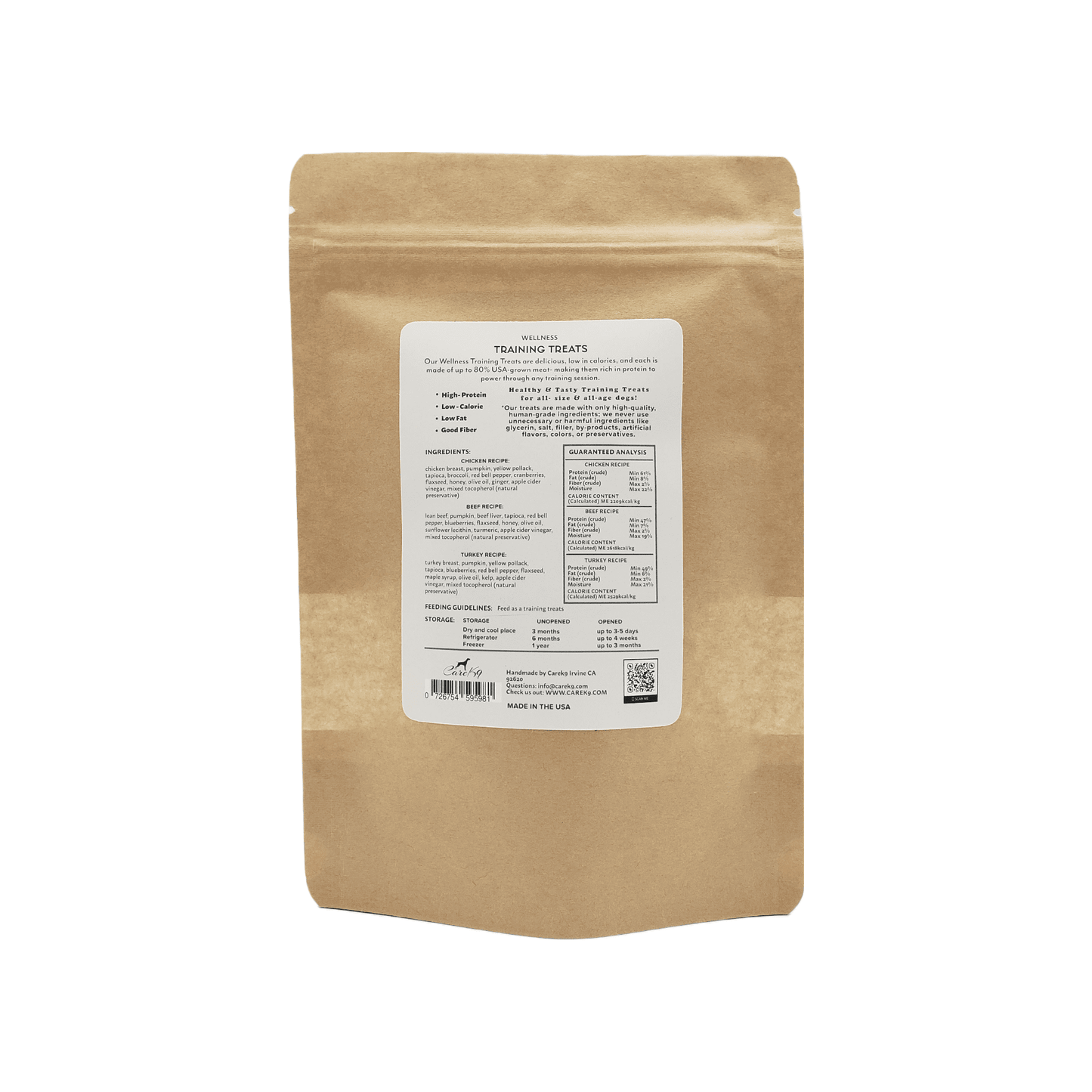
- Single-ingredient if possible. No fillers, no preservatives. The simpler, the better for sensitive stomachs.
- Easy to break. You want flexibility to make pieces smaller for puppies or harder behaviors.
- Strong aroma. Dogs respond to smell first. Air-dried meat treats have concentrated smell that beats commercial biscuits.
- Not messy. Crumbly treats fall into the grass, and your dog goes searching instead of training.
The 3-Tier Treat System for Effective Training
Pro trainers don't use one treat for everything. They use a tiered system:
Tier 1 (Low value): Regular kibble or basic biscuits
Used for behaviors your dog already knows well in low-distraction settings. "Sit" at home, "down" in the kitchen.
Tier 2 (Medium value): Soft commercial training treats
Used for refreshing known behaviors in slightly distracting environments.
Tier 3 (HIGH value): Real meat — beef, chicken, salmon
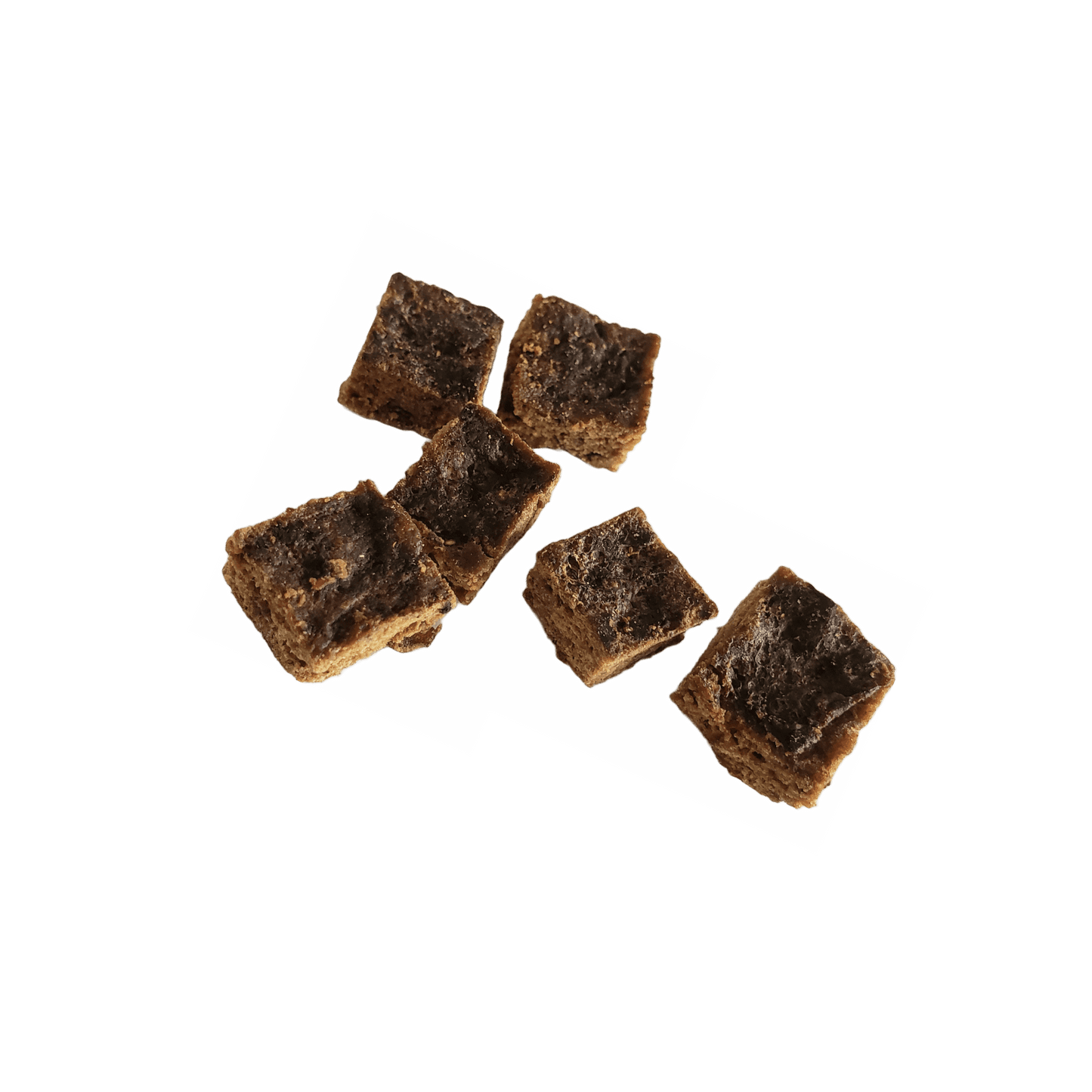
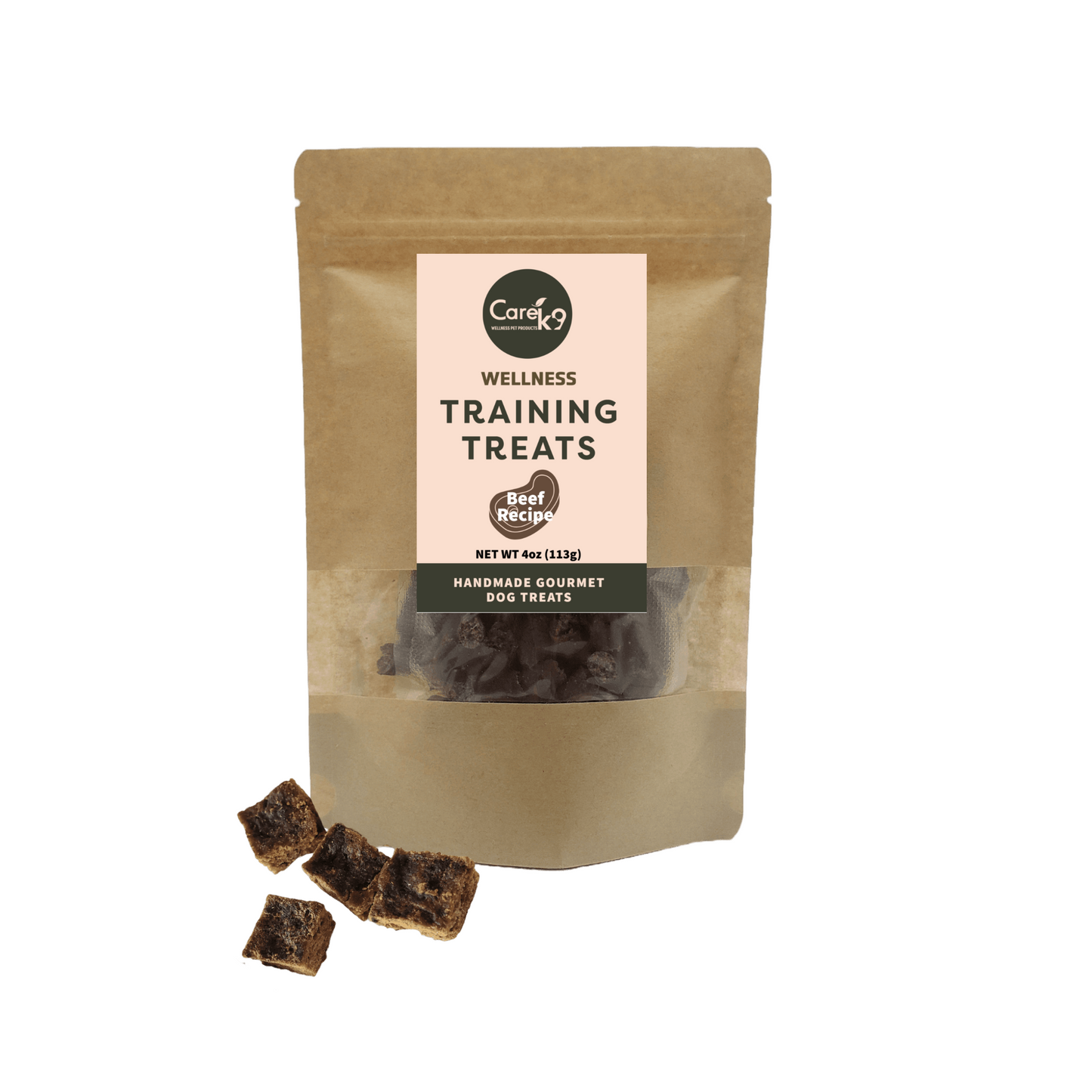
Reserved for new behaviors, high-distraction environments (dog park recall), or scary triggers (other dogs, vacuums, etc.). This is where CareK9 Beef Training Treats shine — USDA beef, air-dried, tear-able into tiny pieces.
Common Training Treat Mistakes
- Treats too big. Dog chews for 30 seconds, you lose the moment. Always use pea-sized.
- Same treat for everything. Dog gets bored, motivation drops. Tier the values.
- Treats too caloric. Watch the cumulative effect over a week. Weight gain creeps up.
- Hard biscuits for puppies. Hard treats are difficult for puppies and slow down training. Use soft, tear-able meat.
- Treats with fillers. Wheat, corn, soy fillers add calories without protein. Dogs work less for them.
- Not phasing out. Once a behavior is reliable, reduce to intermittent rewards. Dogs that get a treat EVERY time stop offering behaviors without one.
Treats by Training Stage
- Brand new behavior: Treat every successful attempt (continuous reinforcement)
- Behavior 80% reliable: Treat every other attempt (variable schedule)
- Behavior solid: Treat 1 in 5 attempts, with occasional jackpot (multiple treats for excellent performance)
- Fully trained: Verbal praise + occasional treat
Frequently Asked Questions
How small should training treats be?
Pea-sized or smaller. For small dogs (under 15 lbs), break to half-pea size. The treat exists to mark the moment, not feed the dog.
Can I use my dog's regular food as training treats?
Yes — for easy behaviors in low-distraction settings. Save high-value real meat for new or hard behaviors.
How many training treats per session?
30-50 micro-pieces over a 10-15 min session is normal. Stay within the daily 10% calorie cap by using pea-sized portions.
Are training treats okay for puppies?
Yes — single-ingredient meat treats are actually better for puppies than most commercial training biscuits. Use very small pieces and watch for digestive sensitivity when introducing new proteins.
What if my dog isn't food-motivated?
Try Tier 3 (real meat) first — most "non-food-motivated" dogs are actually just bored of low-value treats. Other options: tug toys, praise, brief play breaks as rewards. Some dogs are toy-motivated more than food-motivated.
USDA beef. Tiny tear-able pieces.
High-value reward. Air-dried. Single ingredient.
Shop Beef Training Treats — $18.95