


By CareK9 Team · Updated September 2026
Quick answer: "Doggy breath" is not normal. It usually means plaque buildup, gum disease, or in serious cases, kidney or digestive issues. Mild cases respond to daily dental chews containing parsley and mint (natural breath fresheners). Severe cases or sudden bad breath need a vet to rule out medical issues.
If your dog's breath could melt paint, something is wrong. The myth of "doggy breath" being normal has done a lot of damage — bad breath is a symptom, not a personality trait.
The 6 Causes of Dog Bad Breath
- Plaque and tartar buildup (most common). Bacterial colonies on teeth produce volatile sulfur compounds — the actual smell. Affects 80% of dogs over 3 years old to some degree.
- Periodontal disease. Advanced gum disease releases pus and dead tissue into the mouth. Strong rotten smell. Painful for the dog.
- Diet. High-carb diets feed mouth bacteria. Fish-based diets can leave a fishy smell. Eating poop ("coprophagia") causes obvious bad breath.
- Stuck foreign objects. Bone fragment wedged between teeth, plant material lodged in gum. Sudden onset of bad breath.
- Digestive issues. Acid reflux, food allergies, or stomach issues can cause breath that smells acidic or "off."
- Kidney, liver, or diabetes. Sweet/fruity breath = diabetes. Ammonia smell = kidney failure. Musty smell = liver issues. These are emergencies.
How to Tell If It's Just Plaque or Something Worse
| Smell | Likely cause | Action |
|---|---|---|
| Mild "stale" | Early plaque | Daily dental chews, brushing |
| Strong rotten | Periodontal disease | Vet dental cleaning |
| Sweet/fruity | Diabetes | Vet ASAP |
| Ammonia/urine | Kidney failure | Vet emergency |
| Musty | Liver issues | Vet ASAP |
Natural Remedies That Actually Work
1. Dental chews with parsley and mint
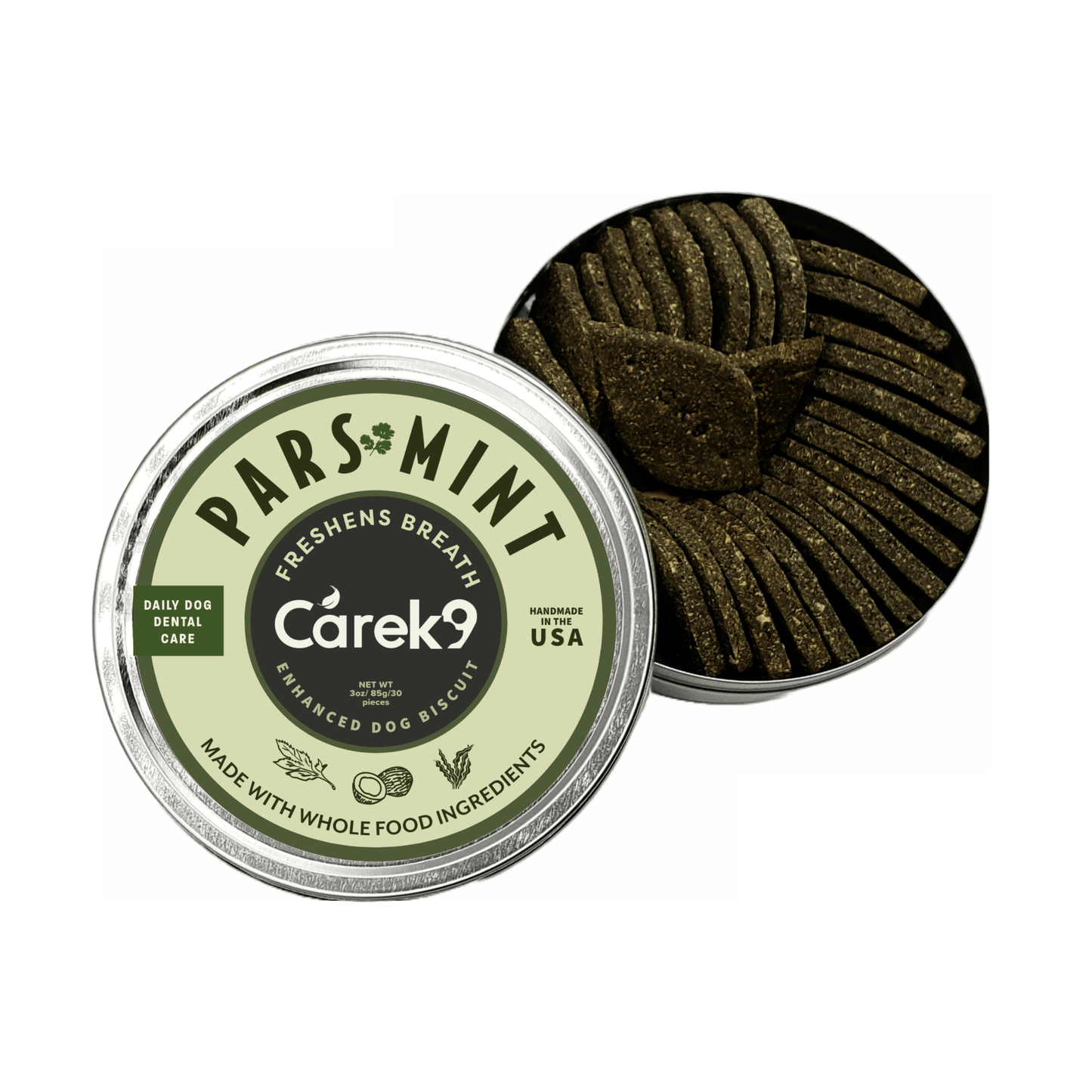
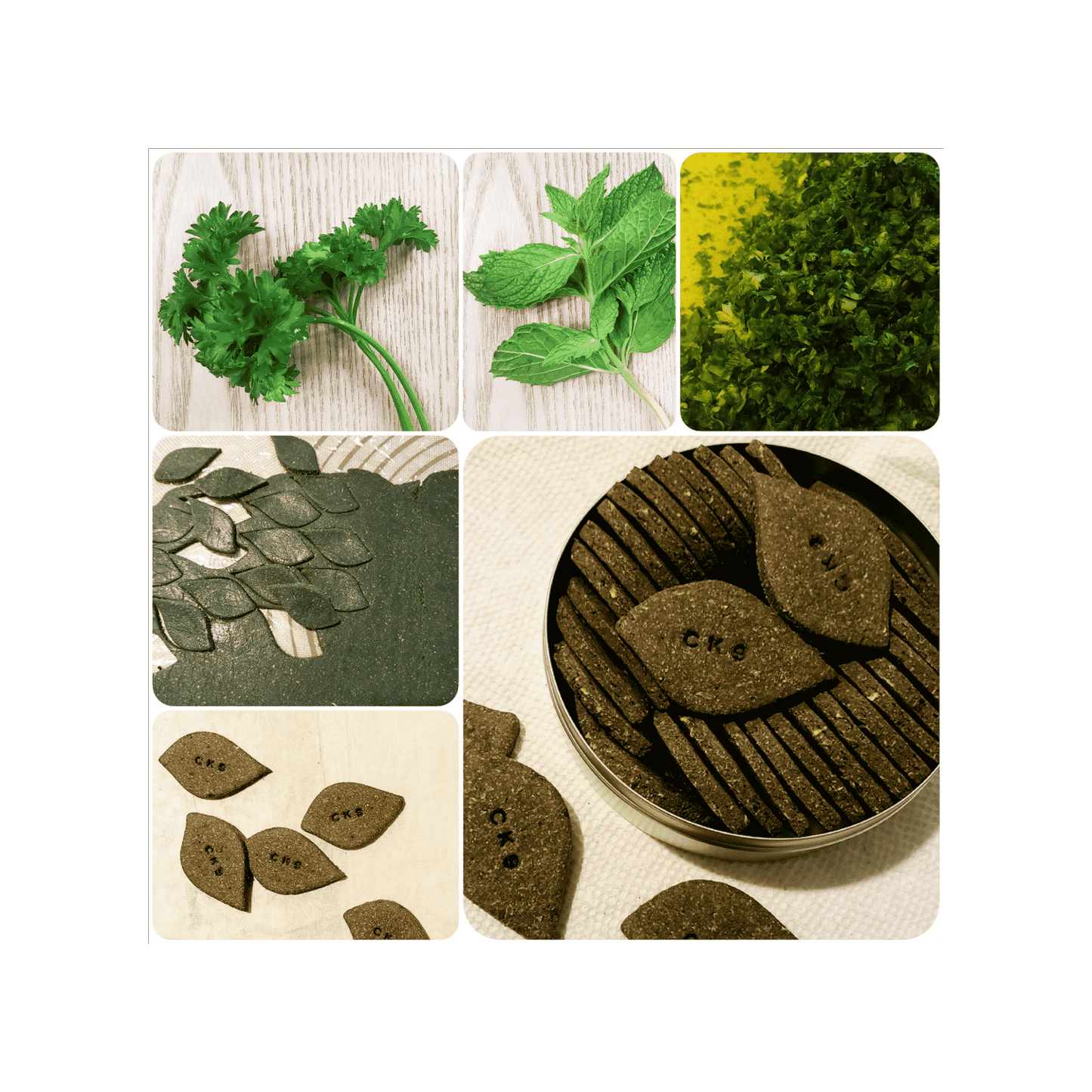
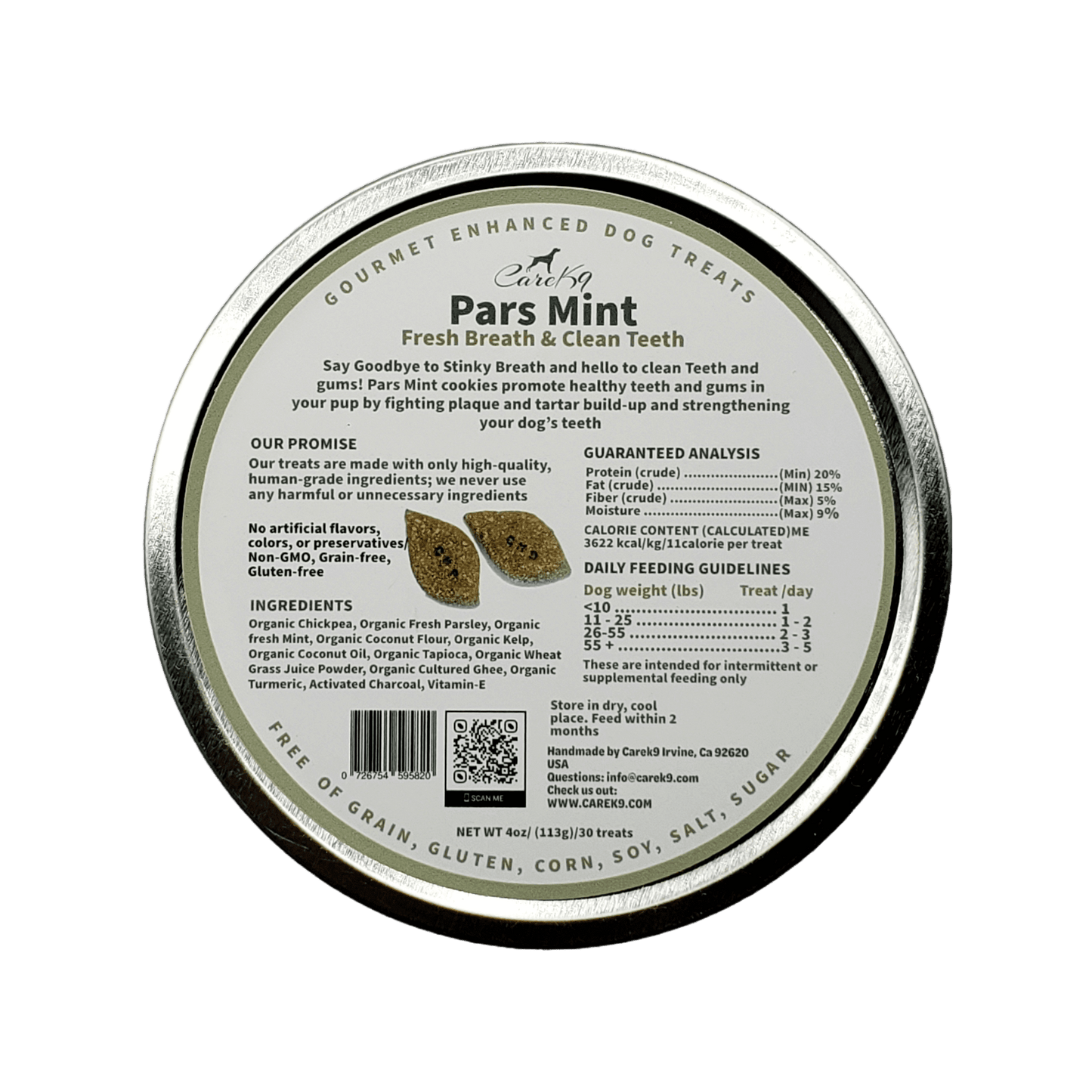
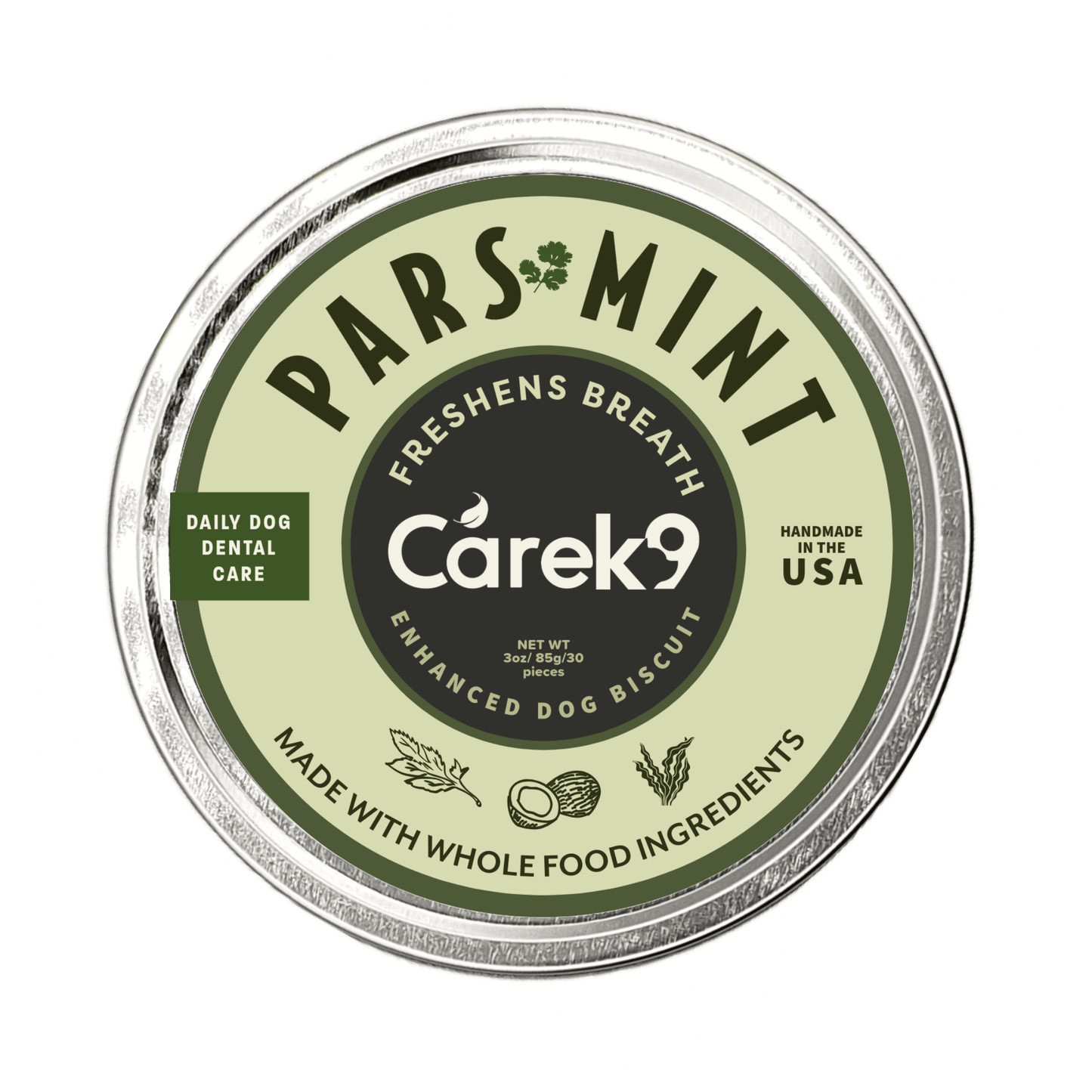
Parsley contains chlorophyll, a natural deodorizer. Mint provides essential oils that fight oral bacteria. CareK9 Mint Dental Cookies use both as primary ingredients — not chemical mouth masks.
2. Daily brushing (the gold standard)
Use a dog-specific toothpaste (never human — fluoride toxic to dogs). 30 seconds per side, 4-5 times per week minimum. Reduces tartar 80% with consistency.
3. Raw bones or appropriate dental chews
Mechanical scrubbing helps remove early plaque. Stick to dog-safe sizes. Avoid cooked bones (splinter risk).
4. Water additives
Enzyme-based water additives (chlorhexidine-free) reduce mouth bacteria daily. Won't fix established tartar but slows new buildup.
5. Diet adjustments
Reduce sugary treats. Avoid wet food as primary diet (sticks to teeth). Add crunchy meat treats that scrape teeth naturally.
6. Annual or semi-annual vet dental cleaning
Once tartar is established, only professional cleaning removes it. Most dogs need a cleaning every 1-2 years starting around age 3-5.
The Truth About "Doggy Breath"
Many owners shrug off bad breath as inevitable. But periodontal disease affects the entire body — bacteria from infected gums enter the bloodstream and stress the heart, kidneys, and liver. A dog with chronic bad breath has more than a smell problem.
Frequently Asked Questions
Do dental cookies actually work?
Yes, for prevention and early-stage tartar. Dental chews with parsley, mint, and abrasive texture help break up early plaque and freshen breath. They won't reverse advanced gum disease — that needs a vet cleaning.
Can I use human breath mints on my dog?
No. Most human breath mints contain xylitol, which is highly toxic to dogs (can be fatal). Stick to dog-specific dental products.
How often should dogs get dental cleanings at the vet?
Annually starting around age 3 for small breeds (more prone to dental issues). Every 1-2 years for medium and large breeds. Some dogs need more frequent cleanings based on tartar buildup rate.
Can I brush my dog's teeth daily?
Yes — daily is ideal. Start slowly: let them lick the toothpaste off your finger for a few days, then introduce the brush. Most dogs adapt within a week.
What if my dog hates brushing?
Daily dental chews + water additives + crunchy single-ingredient treats can substitute. They're less effective than brushing but better than nothing. Schedule more frequent vet cleanings if you can't brush.
Real parsley + peppermint.
Not chemical masking — actual breath freshening.
Shop Mint Dental Cookies — $18.95